

An underbite (mandibular prognathism) is a common maxillofacial defect that causes mouth asymmetry and compromises facial aesthetics. Underbite surgery at Bệnh viện JW will help you improve chewing function and achieve a flawless smile.

Underbite surgery – JW Hospital
Underbite Surgery: A Total Transformation Right After Surgery
An underbite is a condition where the jawbone overdevelops, creating a facial defect and leading to mouth asymmetry. It impairs chewing function, affects speech, and diminishes facial aesthetics. Surgery is required to perform osteotomy, realign the jawbone, and restore an aligned, harmonious bite.
Customer video of underbite surgery – JW Hospital
As an orthognathic surgical procedure, surgeons reposition the jawbones and dental arches to improve chewing function and aesthetic balance. There are two primary techniques for underbite surgery: mandibular osteotomy to set the lower jaw back, or maxillary osteotomy (often with bone grafting/advancement) to harmonize the bite between both jaws.
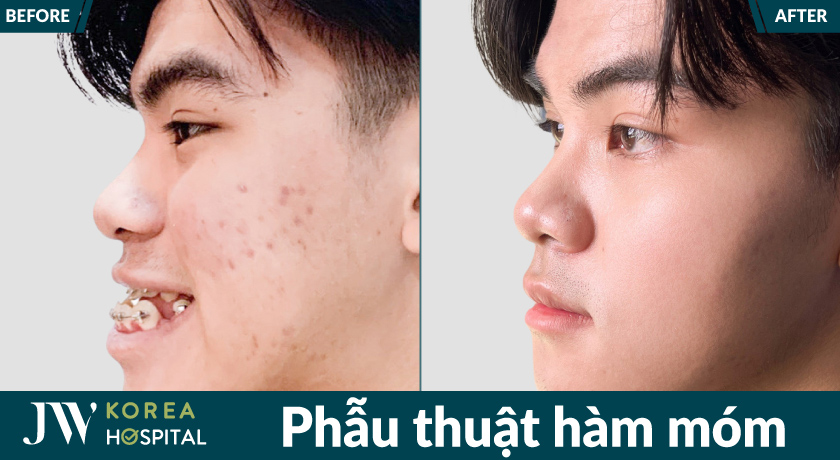
Restoring an optimal bite and confident smile after underbite surgery at Bệnh viện JW
Reasons Why You Should Undergo Underbite Surgery
This is currently the most optimal solution to correct severe jaw overgrowth. Specifically, it offers:
- The surgeon performs precise cuts on the jawbone and repositions bone segments accurately, completely restoring normal bite function after just one procedure.
- The surgery is performed intraorally, leaving no external visible scars on the face.
- Comprehensive 360-degree facial aesthetic improvement, creating a harmonious and balanced facial profile.

Underbite surgery – JW Hospital
Advanced Surgical Methods
At Bệnh viện JW, advanced underbite surgery is performed safely with standout advantages:
- Underbite surgery at Bệnh viện JW is conducted using modern medical technology. Utilizing the specialized Hi-Speed Aesculap bone-cutting system, osteotomy is executed rapidly and painlessly.
- Titanium miniplates and screws provide high biocompatibility and safety, preventing postoperative displacement and securing stable, permanent results.
JW utilizes the Hi-Speed Aesculap system for millimeter-precise osteotomy
Real Clinical Results
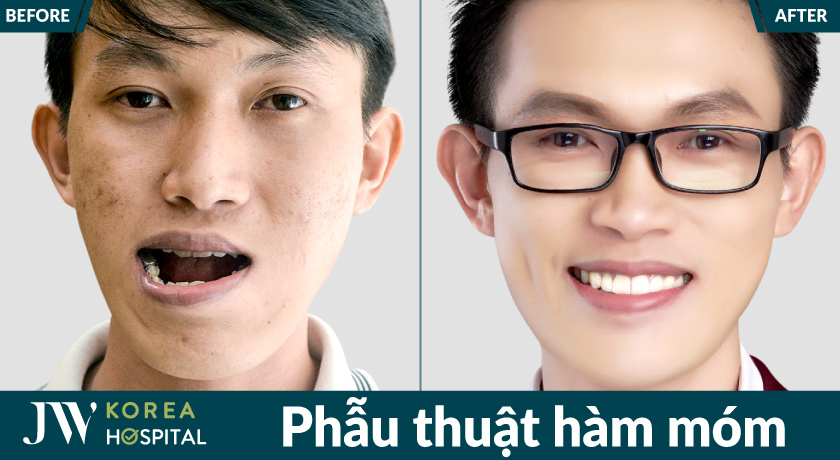
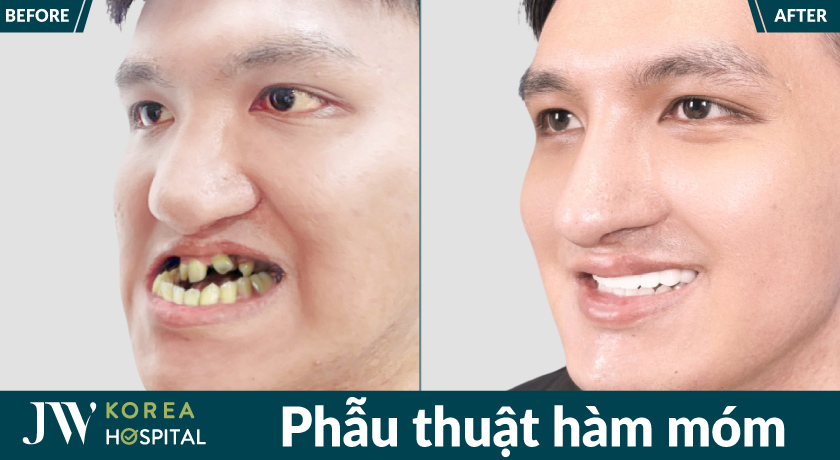
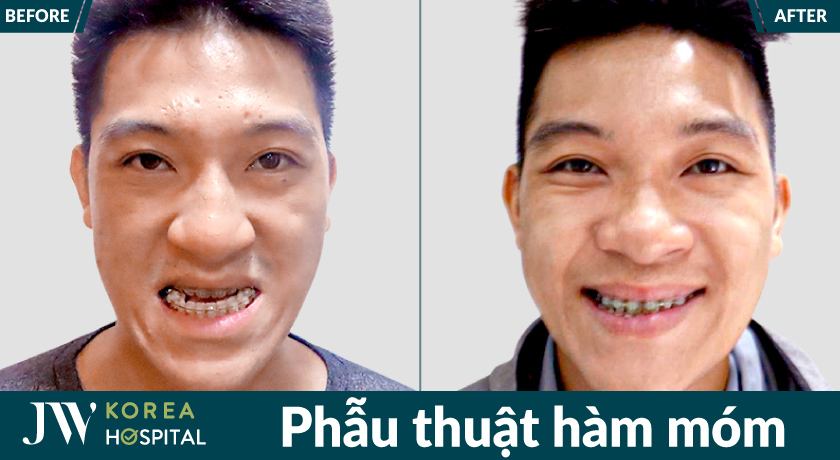

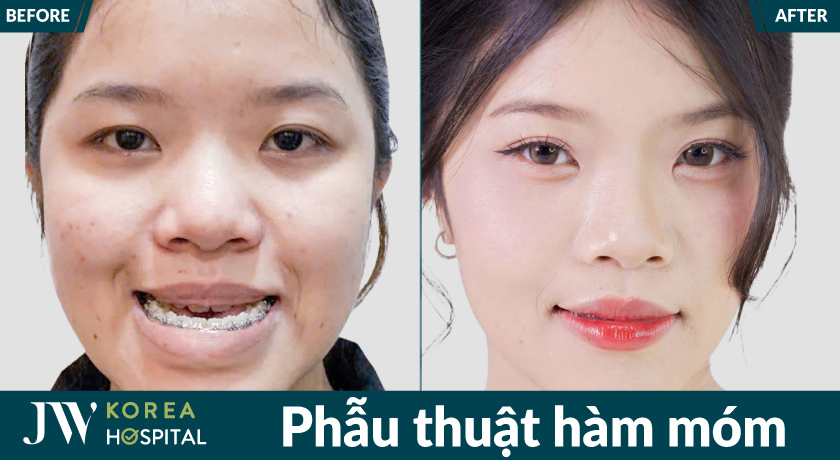
Before and after images of underbite surgery clients – JW Hospital
Procedure Protocol

Preoperative examination and consultation process – JW Hospital
Important Considerations
Before undergoing underbite surgery, it is crucial to research and choose a reputable, accredited facility. The clinic or hospital must be fully licensed by the Ministry of Health for general anesthesia procedures. Most importantly, it must have highly qualified and experienced maxillofacial surgeons to ensure safe and satisfactory cosmetic outcomes.
Postoperative care guidelines to observe:
- Consume liquid porridge or soft foods for the first 2 days after surgery.
- Avoid foods prone to causing inflammation or scarring such as beef, chicken, water spinach, etc.
- Take prescribed anti-inflammatory and pain medications strictly according to the doctor’s instructions.
- Avoid strenuous physical activity and sports for 30 days.
Crucially, attend scheduled follow-up appointments with your specialist for thorough monitoring and optimal treatment results.
Frequently Asked Questions
- Is underbite surgery dangerous?
Similar to overbite correction, underbite surgery is not dangerous. According to maxillofacial experts, orthognathic surgeries are generally very safe when performed under strict protocols. However, you should monitor typical postoperative symptoms to ensure timely intervention if needed.
- Is the surgery painful?
In reality, underbite surgery is not as painful as many people imagine. The surgeon administers general anesthesia during the procedure, ensuring you experience no pain throughout. Postoperatively, you will only feel mild swelling and tightness, and any discomfort is well-managed with prescribed painkillers and anti-inflammatory medications.
- How long after surgery until normal chewing function is restored?
Typically, you should consume porridge, soft foods, and milk during the first 3–5 days, as the bone segments need time to stabilize. By day 7, you can gently chew soft foods. Normal dietary habits can usually be resumed after 6 weeks post-surgery.
Conclusion
We hope this article provides useful information regarding underbite surgery. To schedule a complimentary consultation with our maxillofacial specialists at Bệnh viện JW, call HOTLINE 09.6868.1111 to book an appointment today.